
Selling a home in Omaha comes down to three things: pricing it correctly, preparing it strategically, and understanding the financial side before you list.
If you get those right, the entire home selling process becomes much smoother and often more profitable.
A lot of sellers go into this thinking it’s just about listing the home and waiting for offers, but what really makes the difference is how you approach each step from the beginning. And, as unbiased as I can possibly be, doing so with a listing agent truly makes a world of difference.
This guide walks through how to sell a home in Omaha, NE so homeowners can feel confident about the process and understand what actually impacts your timeline and how much you walk away with. Here is a simple graphic that shows the general steps to selling your home:
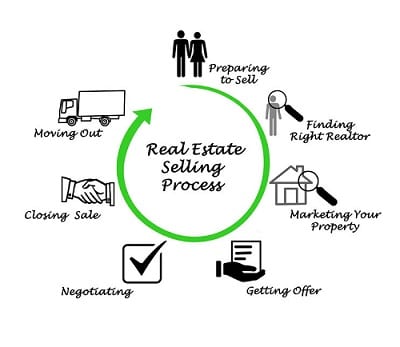
(Source: Oak City Properties)
Of course, selling a home is a lot more involved than any image can portray, and thats what the steps below expand on. A lot goes into selling a home, so it is very important you have an understanding of what to expect, but even more important you have a professional like myself to guide you through the process.
The better you understand the Omaha housing market, the better you can position your home to sell quickly and at a strong, fair price.
Market conditions influence everything from pricing to negotiation strategy.
In Omaha, we look closely at:
Recent sales in your surrounding areas
Current inventory and competition
Buyer demand at your price point
Even within the same city, conditions can vary a lot depending on location and price range. That’s why local insight from people who are in the real estate world every day matters.
Starting with a clear understanding of the market helps avoid overpricing or underpricing right out of the gate.
Pricing your home correctly is one of, if not, the biggest factors in how successful your sale will be.
A home with a proper list price from the start typically gets more interest, more showings, and stronger offers.
To determine your home’s fair market value, we look at:
Recent sale prices of comparable homes
Active listings you’re competing against
Your home’s condition and updates
Buyer activity in your area
While online tools can give you a quick home value estimate, they don’t always account for the details that actually impact what buyers are willing to pay. Things like location on the street, when the HVAC or roof was last replaced/serviced, layout and design, etc.. These details are what many sellers miss and where they burn themselves. As agents, we often run into sellers who saw one house near them sell for a certain price, think they should be able to sell their home for the same and don't budge on the price, then their house sits on the market for months with no luck.
Some sellers choose to get a professional appraisal to avoid overpricing or leaving money on the table. While this can be helpful, it doesn't account for all of the details that agents can inform on.
The way your home shows directly impacts how much buyers are willing to offer.
Small improvements can often lead to a higher sale price and a faster sale.
It is not common that selling you home as is will suffice. However, the goal is not to renovate everything, but to focus on the areas that matter most:
Decluttering and deep cleaning
Addressing minor repair costs
Improving curb appeal
Staging key living spaces
Buyers are comparing your home to others they’ve seen, so presentation plays a big role in how your home is perceived. This is even more relevant today as people's attention spans get smaller and smaller. If your home doesn't immediately catch the eye of someone looking for a home, you can lose out on potential buyers who would actually love your home.
This home selling checklist from Store Space is a great resource to have on hand when you are preparing to sell your home that will make the process that much smoother for you and your agent: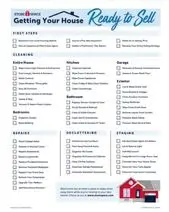
When sellers hear "prepare your home," many assume they need to spend thousands of dollars on renovations before listing. In reality, that's rarely the case. I usually recommend focusing on repairs and improvements that help your home make a great first impression and give buyers confidence that it's been well cared for. Here's a quick guide to help you decide which updates are typically worth making before you put your home on the market.
| Usually Worth It | Usually Not Necessary |
|---|---|
| Fresh paint | Full kitchen remodel |
| Minor repairs | Luxury upgrades |
| Landscaping | High-end appliances |
| Deep cleaning | Replacing everything with new |
| Replacing broken fixtures | Renovating rooms that function well |
Getting your home in front of the right buyers is what drives showings and offers.
A strong listing strategy goes beyond just putting your home on the market.
It typically includes:
Professional photos
A well-written listing description
Online exposure across major platforms
Easy scheduling for showings
Open houses
Some sellers look into flat fee MLS companies or consider whether they should sell FSBO. While those options exist, they often require you to manage pricing, marketing, negotiations, and paperwork on your own.
Working with an experienced real estate agent helps ensure your home is positioned correctly and marketed effectively from day one. One of the biggest mistakes I see is homeowners trying to sell on their own without a strong marketing strategy. As their home sits on the market for months, buyers often begin to wonder why it hasn't sold, making it even harder to attract strong offers. In many cases, sellers end up hiring an agent anyway, but by then they've already lost valuable momentum in the market.
The right offer is not always the highest one—it’s the one with the best overall terms.
Once offers come in, it’s important to evaluate the full picture.
Key things to look at include:
Purchase price
Financing strength, including a mortgage pre approval letter
Contingencies and timelines
Buyer flexibility
You may also receive a fair cash offer, especially if you’re trying to sell your house fast. While these are appealing and can simplify the process, they may come in lower than your home’s fair market value.
The goal is to balance price, certainty, and terms to get the best outcome.
The amount you walk away with is not just your sale price—it’s your sale price minus your costs.
This is one of the most important parts of the selling process that many people underestimate.
Here are the key financial factors to plan for:
The average real estate commission in Nebraska typically ranges from about 3% to 5.8% of the sale price (typically around 3% to both the listing and buyer's agent) (Clever)
Sellers in Nebraska usually pay for the buyer’s title insurance and often the owner’s policy as well
Transfer taxes and prorated property taxes are part of closing costs
Title fees and other transaction-related expenses apply
Buyer concessions may reduce your net proceeds
Nebraska is also a title company state, which means title companies typically handle the closing process and documentation.
It’s also important to understand that homes sold without an agent often sell for less overall compared to those sold with professional guidance. (HomeLight)
Planning for these costs upfront gives you a much clearer picture of your net proceeds. You can plan better by using the below net proceeds calculator from MortgageCalculator.org:

Once you accept an offer, the focus shifts to protecting the deal and moving it toward closing.
In Nebraska, sellers are required to complete a Seller Property Condition Disclosure Statement, which outlines known issues with the home.
After inspections, buyers may:
Request repairs
Ask for credits
Move forward as-is
This is where strategy matters. Not every request needs to be accepted, and understanding repair costs helps you decide what makes sense. This is another area where agent's come especially in handy. Agent's can inform you on what is commonly covered by sellers as a best practice and which requests are unreasonable.
Closing is where everything comes together and the sale is finalized.
In Nebraska, closing is typically handled by a title company, which coordinates:
Final paperwork
Transfer of ownership
Distribution of funds
Seller closing costs often include:
Title-related fees
Title insurance
Prorated property taxes
Potential concessions
In some situations, real estate attorney fees and settlement fees may also apply, though this depends on the transaction.
Once closing is complete, ownership transfers and the home sale is officially done.
How you approach the selling process has a direct impact on your final outcome.
From pricing and preparation to negotiation and closing, each step plays a role in how smoothly your sale goes and how much you walk away with.
While some explore options like FSBO, most sellers find that having guidance helps simplify the process and avoid very costly mistakes.
The right strategy doesn’t just help your home sell—it saves you time, stress, and helps you sell with confidence.
Every home sale is different, but understanding what to expect before you list your home can help you make better decisions and avoid unnecessary surprises. While no one can guarantee exactly how quickly a home will sell, factors like pricing, condition, location, and market demand all play an important role.
The timeline for selling a home can vary, but most sellers can expect the process to look something like this:
| Stage | Typical Timeline |
|---|---|
| Prepare your home for the market | 1–3 weeks |
| On the market | Varies based on price, condition, and demand |
| Under contract to closing | About 30–45 days |
Keep in mind that every home is different. A well-priced, move-in-ready home in a desirable neighborhood may receive multiple offers within days, while a home that's priced too high or needs significant updates may take longer to sell. The better prepared your home is before listing, the smoother the process tends to be.
One of the biggest misconceptions about selling a home is that every neighborhood follows the same trends. In reality, different areas of Omaha often attract different buyers and experience different levels of demand.
For example, affordable, move-in-ready homes like we are seeing in areas like Central Omaha, Aksarben, and older parts of Millard, often generate the most competition, especially among first-time buyers. Homes in higher price ranges in areas like Elkhorn, Gretna, and Millard may stay on the market a little longer, giving buyers more room to negotiate. Seasonal changes can also make a difference, with spring and early summer typically bringing more buyers, while winter weather can make curb appeal and showings a little more challenging.
This is why understanding your specific neighborhood—not just the Omaha market as a whole—is so important. A pricing and marketing strategy that works well in one part of the city may not be the best approach somewhere else. Taking the time to understand your local market can help you attract the right buyers and put yourself in the best position for a successful sale.
Selling a home in Omaha is about more than just putting it on the market. It’s about making the right decisions at each stage to protect your time, your experience, and your financial outcome.
When you understand the market, price your home correctly, and plan for the financial side of the process, everything becomes much more manageable.
If you're thinking about selling and want a clearer idea of your home’s value or what your next steps should look like, finding a trusted agent and starting with the right information makes all the difference.
© Nebraska Realty 2026. All rights reserved.


