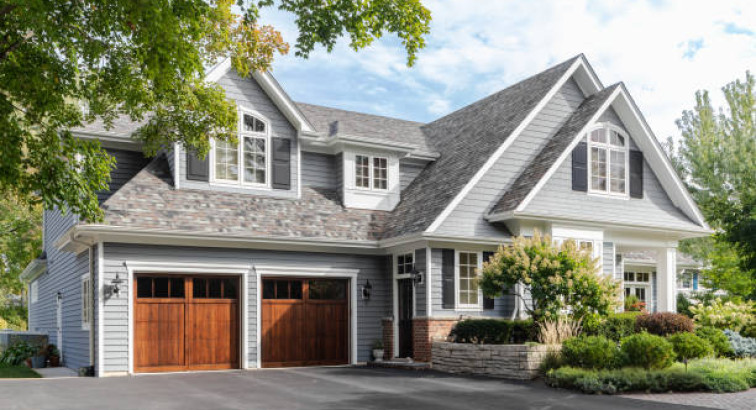
If you're wondering how much down payment do you need for a house in Omaha, you may need much less than the 20% you've probably heard about. Depending on your loan program and financial situation, the minimum down payment could be as little as 3% to 3.5% of the home's purchase price, while eligible borrowers using VA loans or USDA loans may be able to buy with no down payment at all.
That doesn't necessarily mean putting down the minimum is always the best decision. A higher down payment can reduce your loan amount and monthly mortgage payment, and in some cases it can help you avoid mortgage insurance or qualify for better loan terms.
The right amount ultimately comes down to your loan type, savings, credit, monthly budget, and what you want your finances to look like after you buy the home.
Let's break down what Omaha buyers should know before they start house hunting.
There isn't one minimum down payment required to buy a house. Different home loans have different requirements, which is why two people purchasing similarly priced Omaha homes could need very different amounts of cash.
Here's a quick overview:
|
Loan Type |
Minimum Down Payment |
Important to Know |
|---|---|---|
|
Conventional loans |
As little as 3% for certain programs |
Less than 20% down will typically require private mortgage insurance |
|
FHA loans |
As little as 3.5% |
Credit and other eligibility requirements apply |
|
VA loans |
Potentially 0% |
Available to eligible veterans, service members and certain surviving spouses |
|
USDA loans |
Potentially 0% |
Property and borrower eligibility requirements apply |
Certain conventional loans from Fannie Mae and Freddie Mac allow qualified buyers to put as little as 3% down, while FHA financing can require as little as 3.5%. VA-backed purchase loans generally offer eligible borrowers a no-down-payment option when program requirements are met, and qualifying USDA buyers can receive 100% financing for eligible properties.
Your loan officer can help determine which mortgage options you actually qualify for and what each would mean for your upfront and monthly costs.
Percentages are helpful, but it's much easier to understand a down payment when you see the actual dollars involved.
Here's what several down payment amounts would look like at a few example purchase prices:
|
Purchase Price |
3% Down |
3.5% Down |
5% Down |
10% Down |
20% Down |
|---|---|---|---|---|---|
|
$250,000 |
$7,500 |
$8,750 |
$12,500 |
$25,000 |
$50,000 |
|
$300,000 |
$9,000 |
$10,500 |
$15,000 |
$30,000 |
$60,000 |
|
$350,000 |
$10,500 |
$12,250 |
$17,500 |
$35,000 |
$70,000 |
|
$400,000 |
$12,000 |
$14,000 |
$20,000 |
$40,000 |
$80,000 |
These are simply examples, not estimates of what you'll personally need. But they show why the difference between a 3%, 5%, and 20% down payment matters so much.
On a $300,000 home, for example, the difference between 5% and 20% down is $45,000. That's a pretty big difference when you're trying to decide how much you need to save before buying.
No, you do not need a 20% down payment to buy most homes. Depending on the mortgage loan you qualify for, you may be able to purchase with considerably less.
So why does everyone talk about 20%?
For conventional loans, reaching 20% down generally allows you to avoid private mortgage insurance. Putting more money down also reduces the amount you're borrowing, which can lower your monthly mortgage payment and total borrowing costs.
But I don't want buyers to see 20% as some magic number they have to reach before they're "ready."
If putting 20% down would completely drain your savings, buying with a smaller down payment may make more sense. Your home is going to come with expenses after closing too, and having money left in savings can be just as important as reducing your mortgage.
I know firsthand that you don’t need 20% down to become a homeowner. When I bought my first home, I used a Nebraska first-time homebuyer program and put just 3.5% down. More recently, two first-time homebuyers I’ve worked with purchased their homes with less than 5% down.
That’s why I always encourage buyers to understand their options before assuming they haven’t saved enough. The amount you actually need may look very different from the 20% figure you’ve always heard.
Your loan program is one of the biggest factors determining how much you'll need to put down. You don't need to become a mortgage expert before buying, but understanding the basic differences can help you have a much more productive conversation with your lender.
Some conventional loans allow qualified buyers to purchase with as little as 3% down, although the exact requirement depends on the mortgage product and borrower.
If you put less than 20% down, you'll typically pay private mortgage insurance. A higher credit score and stronger overall financial profile may also help you qualify for more competitive interest rates and loan terms.
FHA loans can allow a minimum down payment of 3.5% for borrowers who meet the program's requirements.
These loans can be particularly helpful for first time homebuyers or buyers with less than perfect credit, but the down payment isn't the only cost to consider. FHA financing also comes with mortgage insurance, so it's important to compare the total cost rather than choosing a mortgage based solely on the minimum amount you can put down.
VA loans can allow qualified veterans, active-duty service members and certain surviving spouses to purchase without a down payment. The VA also doesn't require private mortgage insurance, although other costs and a VA funding fee may apply.
A lender will still evaluate your income, debts, credit and ability to afford the loan, so no down payment doesn't mean automatic loan approval.
USDA loans can provide 100% financing to qualified buyers purchasing eligible properties, meaning no down payment may be required. Income and property eligibility requirements apply.
This is particularly worth knowing if your home search extends beyond Omaha itself. If you're considering communities outside the urban core, ask your loan officer whether any of the areas you're exploring qualify for USDA financing rather than assuming they do or don't.
The best down payment isn't necessarily the largest one you can possibly afford. It's the amount that creates the right balance between your upfront savings, monthly costs, and financial security after closing.
A higher down payment can offer some real advantages:
A smaller loan amount
A lower monthly mortgage payment
Less interest paid over time
Potentially a better interest rate
Less or no private mortgage insurance on a conventional loan
More equity in the home from day one
But there's another side to that decision.
Putting every dollar you've saved into your down payment can leave you without much of a cushion for moving, repairs, furniture, maintenance, or unexpected expenses.
This is one of those situations where "more" isn't automatically "better." I would much rather see a buyer understand all of their mortgage options and make a comfortable decision than become house-poor just so they can say they put 20% down.
Your down payment isn't the same thing as your closing costs, and this is one of the most important distinctions to understand when figuring out how much cash you'll need to buy.
Closing costs generally include expenses associated with finalizing the mortgage loan and purchase. They can include:
Lender and loan origination charges
Appraisal costs
Credit report fees
Title insurance
Government and recording fees
Prepaid taxes and insurance
Initial escrow funding
Closing costs commonly range from about 2% to 5% of the home's purchase price, separate from the down payment. Your actual costs will depend on the property, lender, loan type and transaction.
That means a buyer with $20,000 saved shouldn't automatically assume all $20,000 can go toward the down payment.
You'll want to account for closing costs and leave room for the expenses that come immediately after buying as well.
Earnest money is another upfront expense buyers should prepare for, but it isn't an additional down payment.
When you make an offer on an Omaha home, you may include earnest money to demonstrate to the seller that you're serious about the purchase. If the transaction closes as planned, that money is generally credited toward the funds you owe at closing according to the terms of the transaction.
The appropriate amount can depend on the property, purchase price, current market conditions and how your offer is structured.
This is where your real estate agent can help. Instead of relying on a generic rule you found online, your agent can help you determine an appropriate earnest money amount based on the particular Omaha home and competitive situation you're dealing with.
From my perspective as your real estate agent, this is something we decide based on the actual home and offer. It's not a number I want buyers choosing from a generic rule online. We’ll look at the purchase price, the level of competition for the home, and the overall terms of your offer before deciding what makes sense.
The amount you put down directly affects how much you need to borrow, so a higher down payment generally means a lower monthly mortgage payment.
But your down payment is only one piece of that payment.
Your total monthly housing expense may include:
Principal
Interest
Homeowners insurance
Mortgage insurance, when applicable
HOA dues, if applicable
Your interest rate also matters significantly. Two buyers purchasing homes for the same price could end up with different monthly payments because of differences in their down payments, credit profiles, mortgage rates, insurance costs, and loan programs.
This is why I recommend figuring out the monthly payment you're comfortable with rather than starting with the maximum purchase price a lender says you can afford.
A pre approval can tell you what you may qualify to borrow. It doesn't tell you what payment will feel comfortable within your everyday budget.
A higher down payment can make sense if it lowers your monthly expenses while still leaving you with healthy savings after closing.
For example, putting additional money down may be worthwhile if it:
Significantly reduces your monthly payment
Helps eliminate private mortgage insurance
Improves the terms of your mortgage loan
Keeps your monthly housing expenses within a more comfortable range
On the other hand, I wouldn't automatically empty an emergency fund just to increase a down payment.
Think about what happens after you get the keys. Homes need maintenance. Appliances eventually break. You may want furniture, paint, landscaping, or other improvements. And sometimes life simply throws an unexpected expense at you.
Your dream home won't feel quite as dreamy if buying it leaves you stressed every time something needs to be repaired.
One local resource Nebraska buyers should know about is the Nebraska Investment Finance Authority, or NIFA.
NIFA currently offers programs that can help eligible Nebraska buyers with down payment and closing cost assistance. Its First Home options are designed for eligible first-time homebuyers and certain other qualifying buyers, while its Welcome Home program includes options for eligible first-time and repeat buyers. Income, purchase price and other program requirements apply.
This is exactly why I don't recommend assuming you need to save a certain amount before talking to anyone.
If the down payment is the one thing making homeownership feel out of reach, ask a participating lender whether you qualify for payment assistance or another low-down-payment loan program. You may discover there are options you didn't know existed.
Your credit score can affect the mortgage options available to you, but your score alone doesn't determine how much money you'll need to put down.
Different programs have different eligibility requirements, and mortgage lenders also consider factors such as:
Income
Existing debt
Employment
Credit history
Available savings
Loan amount
Property type
In some cases, a higher credit score can help you qualify for better loan terms or a more competitive interest rate. A lower score may limit some options or affect the minimum down payment required by a particular program or lender.
If you're more concerned about qualifying than saving for a down payment, I've covered this topic in much more detail in my guide to what credit score you need to buy a home in Nebraska.
You don't necessarily need your entire down payment sitting in the bank before you have your first conversation with a lender or real estate agent.
In fact, I'd rather have buyers learn their options early.
Before you seriously start house hunting, however, you should have a clear picture of:
Your likely down payment
Estimated closing costs
How much cash you'll need at closing
Your expected monthly mortgage payment
How much savings you'll have left afterward
Once you have those numbers, your home search becomes much more useful.
This is also a conversation I like to have with buyers before we start looking at homes. Just because you're pre-approved up to a certain purchase price doesn't mean we need to shop at the very top of that range. Knowing the monthly payment you're actually comfortable with helps us build an Omaha home search around your real-life budget instead of simply focusing on the maximum amount you can borrow.
Instead of asking, "What's the most expensive house I can buy?" you can start asking, "What purchase price gives me a payment I'm actually comfortable with?"
That's a much better way to shop.
For most Omaha buyers, the biggest takeaway is simple: don't let the idea of a 20% down payment keep you from exploring homeownership.
There are conventional loans requiring as little as 3% down, FHA loans with a 3.5% minimum for qualifying borrowers, and VA and USDA options that can potentially require no down payment at all. Nebraska buyers may also have access to NIFA down payment assistance depending on eligibility.
But the lowest possible down payment isn't necessarily the goal either.
The better question is: How much can you put down while still keeping your monthly payment comfortable and maintaining enough savings for closing costs, moving, repairs, and life after buying?
That's a question worth answering before you fall in love with a house.
Talk with a loan officer about the home loans available to you, get your pre approval, and then work with a local real estate agent to understand what your budget can realistically buy in Omaha.
When those pieces are in place, you can start house hunting with a lot more confidence and focus less on the financing and more on finding the right home.
If you're not sure where to start, talk with a loan officer about your financing options before you begin house hunting. Once you know what you're comfortable spending, I can help you understand what that budget can realistically buy in Omaha and find the right home when you're ready.
© Nebraska Realty 2026. All rights reserved.


